
Why Your AC Air Ducts Matter for Comfort and Air Quality
An AC air duct is the network of sealed pathways that carries cooled or heated air from your HVAC equipment to each room, then brings return air back for conditioning. When ducts are properly sized, supported, insulated, and sealed, they help deliver steadier temperatures, quieter operation, lower energy waste, and cleaner indoor air.
Problems such as leaky joints, crushed flexible duct, loose connections, or a dirty filter can reduce airflow and pull dust or unconditioned air into the system. Common clues include hot or cold rooms, weak airflow at vents, excess dust, musty odors, and rising utility bills.
This guide explains how ductwork works, compares common AC air duct materials, and helps Franklin-area homeowners and businesses know when a repair, sealing service, inspection, or professional cleaning may be worthwhile.
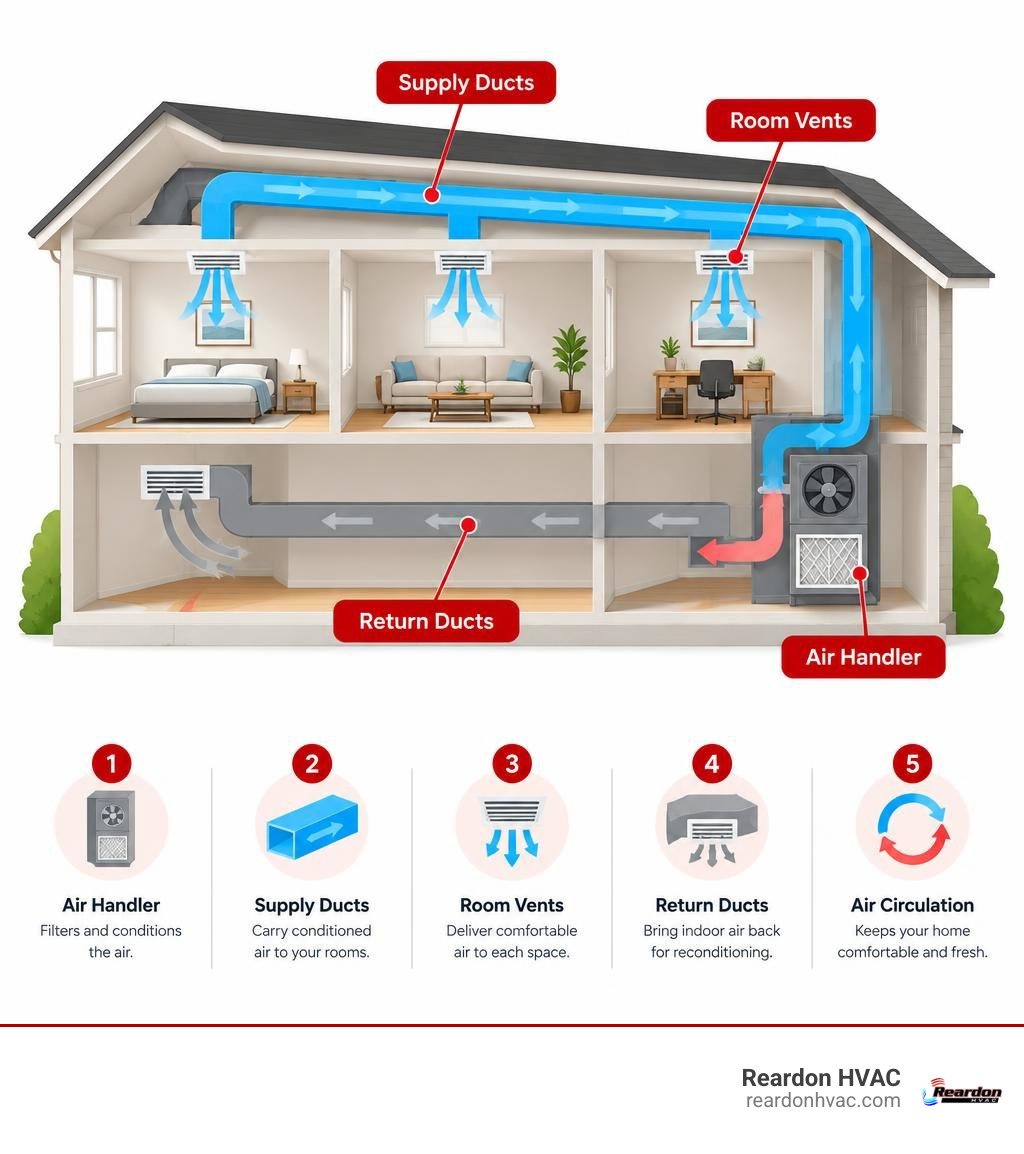
How an AC Air Duct System Works and Its Key Components
At the heart of every forced-air system is a delicate balance of air delivery and return. The blower fan draws stale indoor air through return grilles, pushes it through an air filter, circulates it across a cooling evaporator coil or heating element, and finally discharges conditioned air into the supply trunk.
To maintain quiet, consistent airflow without creating unwanted static pressure, every central duct layout incorporates specialized mechanical fittings. Homeowners in Massachusetts who notice uneven temperatures or whistling registers often benefit from professional duct & vent services to optimize the core network.
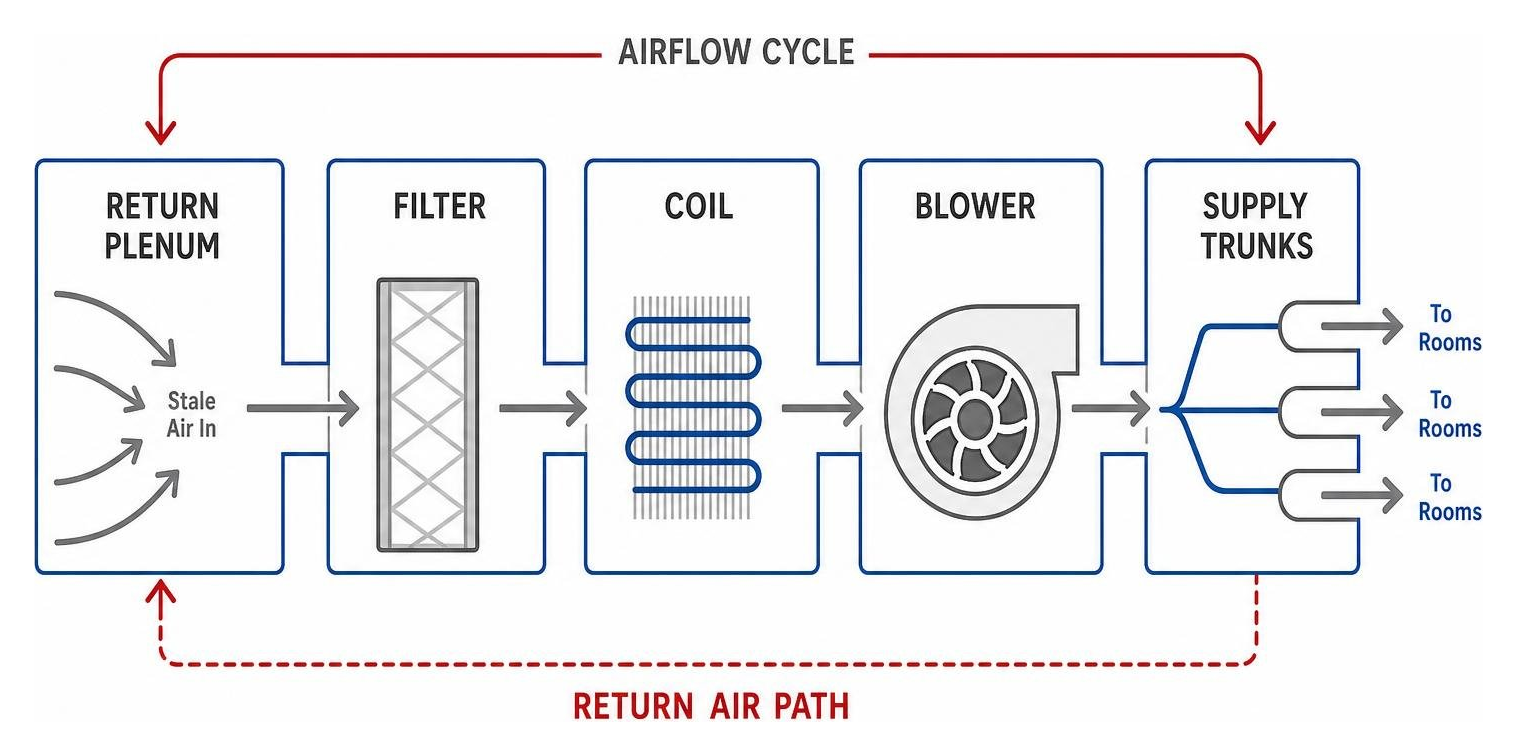
Key assemblies include:
- Supply and Return Plenums: The large sheet metal boxes directly attached to the air handler or furnace. The supply plenum collects conditioned air before it splits into branching trunks, while the return plenum gathers stale air from throughout the home.
- Vibration Isolators: Flexible, heavy-duty fabric joints installed where metal ducts meet the mechanical air handler. They absorb motor and blower vibrations so mechanical humming does not echo through the building framing.
- Volume Control Dampers: Movable internal metal plates positioned inside individual branch runs that allow technicians to balance CFM (cubic feet per minute) delivery across multiple rooms.
- Fire and Smoke Dampers: Critical life-safety devices installed where ducts pass through fire-rated assemblies. They feature fusible links designed to melt under extreme heat, automatically shutting the damper to stop fire and smoke spread.
- Turning Vanes: Curved aerodynamic guide fins placed inside 90-degree duct elbows to smooth out air turbulence, preventing dramatic static pressure drops.
Types of AC Air Duct Materials and Their Performance Impact
Choosing the right duct material impacts how long the system lasts, how quietly it operates, and how efficiently it retains cooling energy. Standard round supply runs commonly range between 4 and 24 inches in diameter (with 6- to 12-inch diameters serving most residential runs), but the material composition dictates airflow performance:
- Galvanized Sheet Steel: The gold standard for longevity and low friction. Its protective zinc coating prevents rust, and its smooth interior surfaces minimize airflow drag.
- Aluminum Ductwork: A lightweight alternative to steel, popular for specialized custom fabrications and high-humidity environments where superior corrosion resistance is essential.
- Fiberglass Duct Board: Pre-insulated rigid boards made from resin-bonded glass fibers. While offering built-in thermal protection and sound dampening, internal surfaces can trap dust if protective facings degrade.
- Flexible Ducting (Flex): A flexible wire helix encased in puncture-resistant plastic and wrapped in fiberglass insulation. It excels at making short transitions around structural framing, but excessive bends or kinks create severe airflow restriction.
- Fabric Ducting: Lightweight, permeable textile tubes often used in exposed commercial ceilings. Made with antimicrobial coatings or recycled materials, they distribute air evenly through micro-perforations without traditional metal registers.
- Phenolic and Polyurethane Panels: Lightweight, pre-insulated rigid foam panels clad in protective aluminum foil. They allow single-step fabrication and installation without needing secondary external insulation wraps.
| Material | Durability | Acoustic Dampening | Thermal Efficiency | Primary Application |
|---|---|---|---|---|
| Galvanized Steel | High (25+ years) | Low (transmits sound) | Needs external wrap | Main residential & commercial trunks |
| Aluminum | High | Low | Needs external wrap | Custom retrofits, coastal climates |
| Fiberglass Duct Board | Moderate | High (absorbs noise) | High (built-in) | Commercial branches, quiet zones |
| Flexible Ducting | Moderate (10–15 yrs) | Moderate | Moderate to High | Final branch runs (<15 feet) |
| Fabric Ducting | Moderate | High | N/A (room conditioned) | Open commercial spaces, gyms |
| Phenolic Panels | High | Moderate | Excellent (R-6 to R-8.5) | Modern commercial & high-efficiency builds |
Core Mechanical Components and Flow Controls
Beyond straight runs of ductwork, specialized transitions direct air from main distribution trunks into living spaces. Installers use take-off fittings to tap into rectangular trunks with round branch pipes, stack boots to transition low-profile in-wall ducts up through vertical studs, and terminal air diffusers to mix conditioned air smoothly into occupied rooms.
Adhering to strict equipment manufacturer specifications—such as those detailed in commercial and residential equipment installation guidelines—ensures airflow dampers and structural hangers support the weight of these assemblies without putting mechanical stress on the air handler cabinet.
Diagnosing Ductwork Problems and Air Quality Hazards
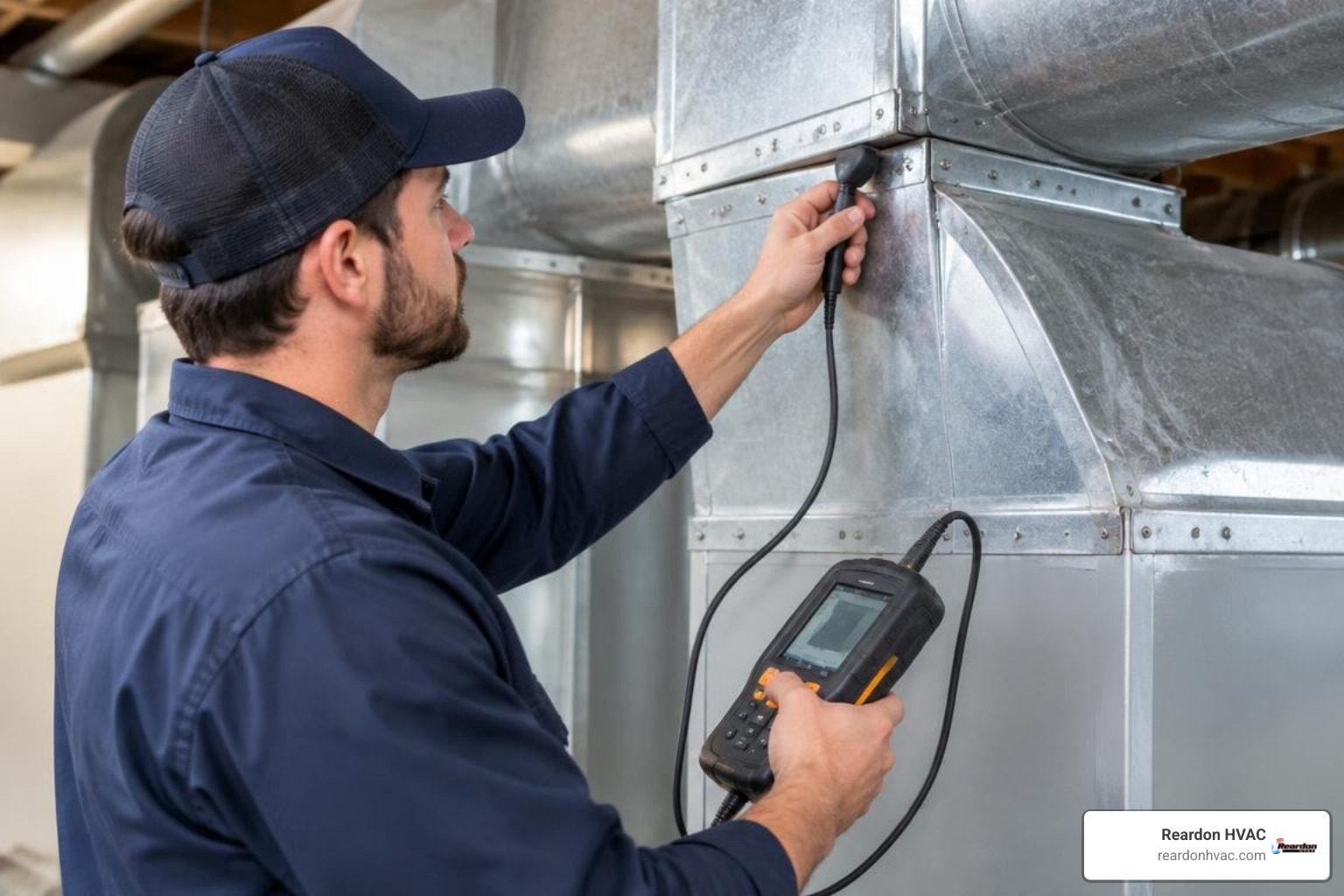
Ducts hidden behind drywall, inside crawlspaces, or across unconditioned attics frequently suffer out-of-sight failures. When air ducts leak, they do not just waste conditioned air; they create pressure imbalances that draw crawlspace fumes, attic insulation dust, and moisture into living areas. To maintain clean home air, our team provides comprehensive whole-home indoor air quality services to locate and eliminate hidden environmental hazards.
Identifying Duct Leaks and Pressure Drops
A compromised duct network leaves distinct clues throughout the living space. When ducts leak on the supply side, conditioned air is dumped into empty attics; leaks on the return side actively vacuum unconditioned, dirty air into your breathing space.
Common warning signs of compromised ductwork include:
- Unexplained utility bill spikes during peak cooling and heating seasons.
- Rooms that stay persistently warmer or cooler than the rest of the house.
- Weak airflow coming from registers, despite clean air filters.
- Rapid dust buildup on furniture and around vent grilles shortly after cleaning.
- Whistling, rattling, or booming sounds when the blower motor turns on.
- A drop in cooling performance indicating an underlying need for AC repair or system rebalancing.
Biological Contaminants and Cleaning Standards
There are many common misconceptions regarding residential duct cleaning. Scientific studies show that routine residential duct cleaning has never been proven to prevent general health issues on its own, and haphazard brush cleaning can actually dislodge settled dust into living spaces.
However, professional cleaning and sanitization become necessary when specific contamination thresholds are breached:
- Visible Mold Contamination: When internal duct surfaces or insulation host living mold colonies, verified through laboratory tape lifts or visual inspection.
- Vermin Infestation: When rodents, insects, or birds have nested within ducts, leaving droppings, dander, or nesting material.
- Renovation Debris: After significant structural remodeling where drywall dust, sawdust, and construction particulates bypassed return registers.
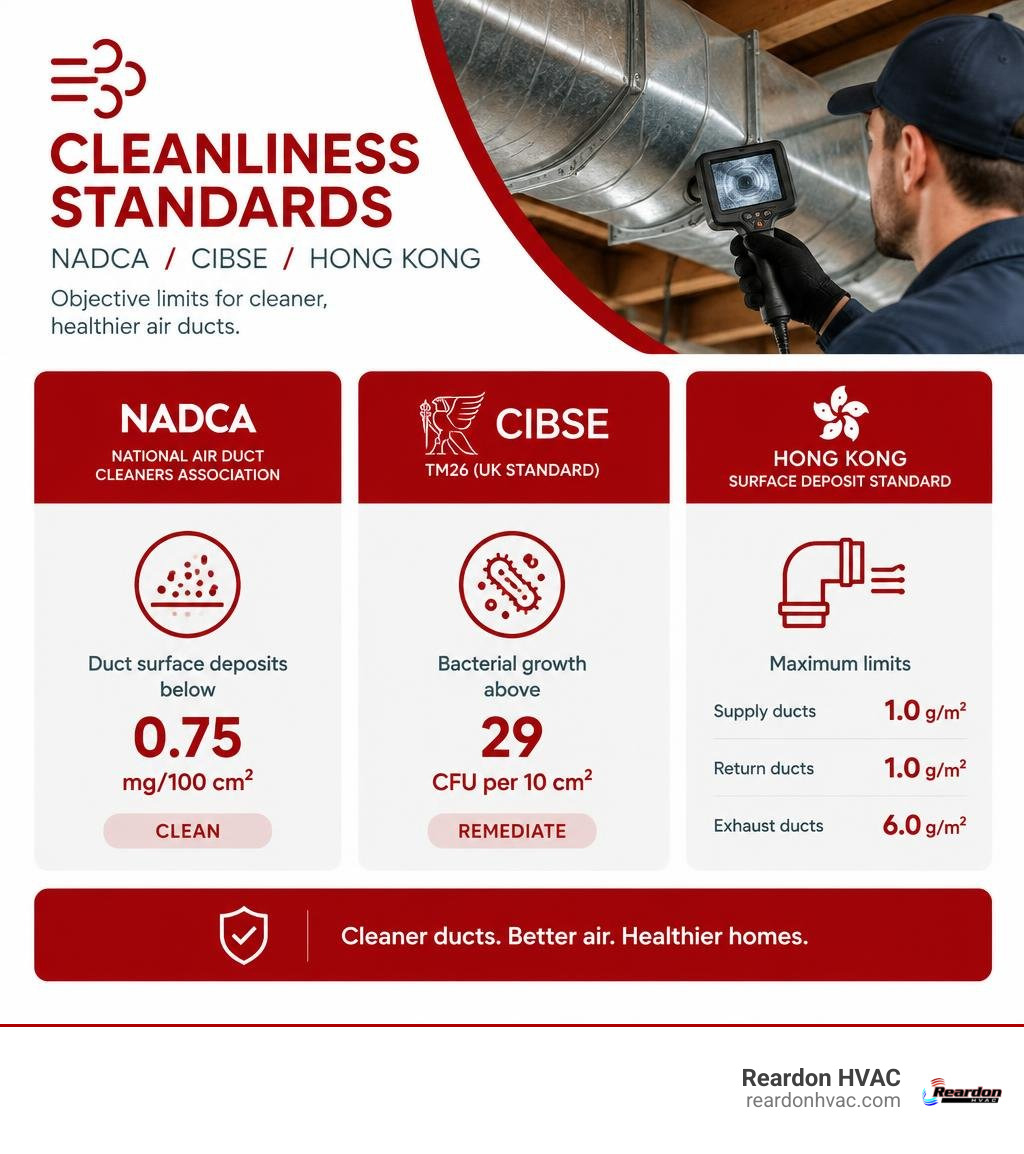
Established industry standards set objective metrics for when cleaning is required:
- NADCA (National Air Duct Cleaners Association): Ducts with surface deposits below 0.75 mg/100 cm² are classified as clean.
- CIBSE TM26 (UK Standard): Recommends immediate system remediation if measured bacterial growth exceeds 29 colony-forming units (CFU) per 10 cm².
- Hong Kong Surface Deposit Standard: Enforces maximum limits of 1.0 g/m² for supply and return ducts, and 6.0 g/m² for exhaust ducts.
Best Practices for Installing, Sealing, and Upgrading Ducts
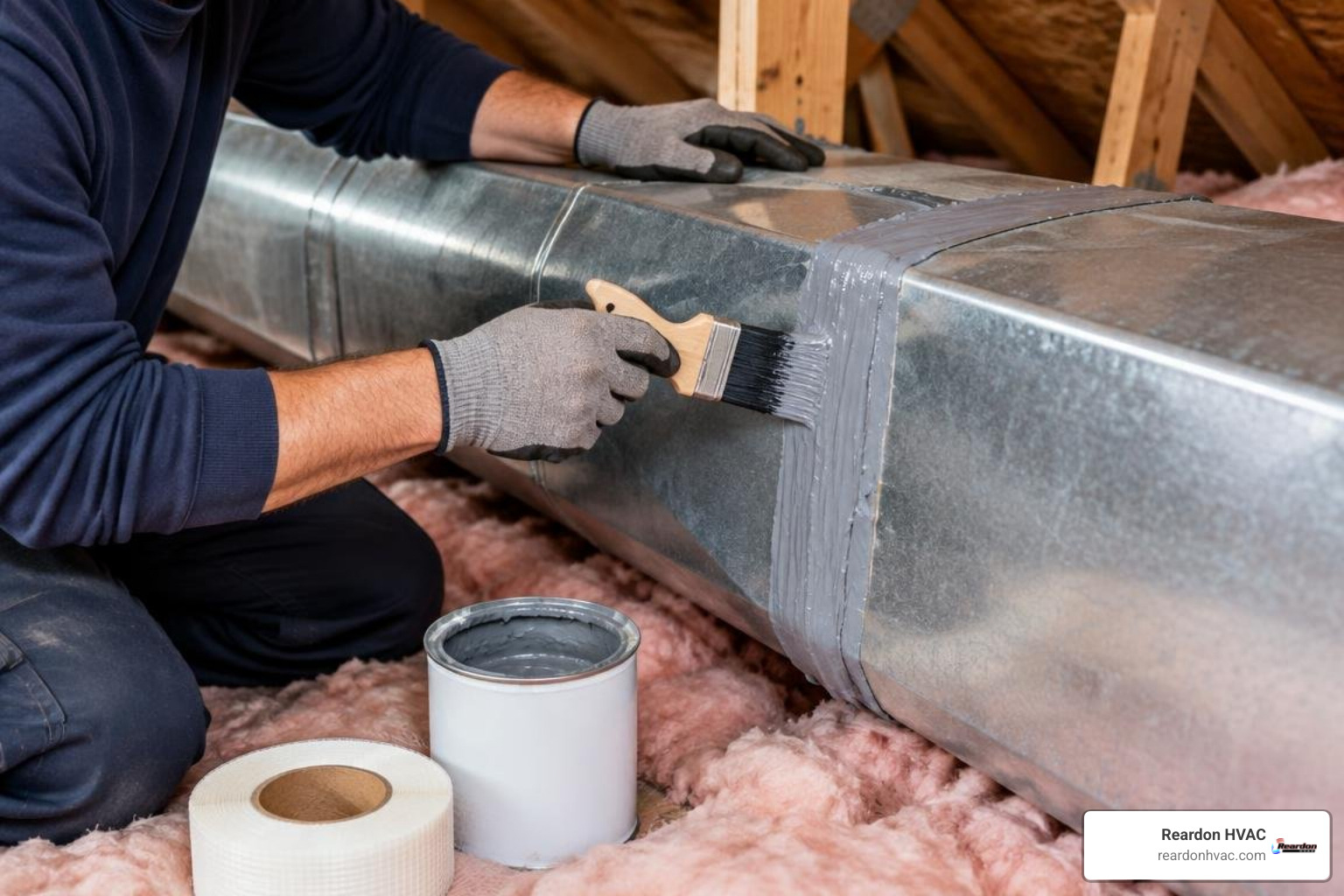
High-performance HVAC systems require meticulous duct design and airtight sealing. Standard cloth-backed duct tape degrades rapidly over time as adhesive dries out. Durable installations rely on mastic paste reinforced with fiberglass mesh or specialized UL 181-rated foil tapes that retain their seal through hundreds of thermal expansion cycles.
Properly executed duct projects follow stringent ACCA (Air Conditioning Contractors of America) engineering protocols, such as those outlined in packaged unit installation instructions, keeping air leakage below industry thresholds and protecting mechanical equipment.
Installing and Sizing an AC Air Duct for Maximum Airflow
Proper duct sizing is determined through ACCA Manual D calculations, which analyze the friction rate, static pressure limits, and CFM required for every specific room.
- Flex Duct Run Limits: Flexible ducts must be stretched taut (maximum 4% sag between supports) and kept under 15 feet in total run length. Excessive slack or sharp turns create dramatic friction losses, choking airflow to terminal registers.
- Combustible Clearances: When routing ductwork near furnaces or heat kits, maintain minimum clearances to combustible materials (typically 24 inches on service access sides and 48 inches above packaged outdoor heat sections).
- Condensate Trapping: Indoor cooling coils generate gallons of water daily. Condensate lines must pitch downward at least 1 inch per 10 feet, incorporate a minimum 3-inch deep trap, and be primed with water prior to startup to prevent drain pans from overflowing.
- Concealed Handler Specs: Low-profile ducted units require dedicated electrical disconnects, grounding, and vibration pads, following strict concealed duct installation specifications to operate at whisper-quiet sound levels (as low as 26 dB).
Rebates, Grants, and Tax Credits for Duct Sealing
Because duct leakage accounts for up to 30% of total heating and cooling waste, government programs and utility providers offer financial incentives to offset sealing costs:
- Federal & Utility Rebates: In the U.S., homeowners upgrading or sealing existing duct systems can frequently leverage Inflation Reduction Act (IRA) energy-efficiency credits and local utility rebates.
- Canadian Provincial Programs: Revenu Québec’s Tax Credit for Home Support offers tax relief on labor costs for services like duct cleaning and maintenance for seniors over 70.
- Disability Assistance Grants: In Montreal, CNESST provides eligible injured workers with permanent disabilities up to $3,897 (2024 metric baseline) for home maintenance, including specialized duct sanitization.
Frequently Asked Questions About Air Ducts
When is duct cleaning truly necessary for indoor air quality?
Duct cleaning is needed when there is visible mold growth inside the ducts, active vermin or pest infestations, foul odors originating from vents, or thick construction dust following home renovations. Routine cleaning of clean, dry ducts does not improve baseline indoor health.
Why is flexible ductwork restricted to short run lengths?
Flexible duct has a corrugated inner core that creates high friction against moving air. Runs longer than 15 feet, or flexible ducts with sharp 90-degree bends, cause significant static pressure drops, starving terminal rooms of adequate conditioned air.
How do leaking air ducts impact overall system lifespan?
Leaky ducts force cooling equipment to run longer cycles to satisfy the thermostat. This extra workload causes premature wear on blower motors and compressors, increases short-cycling, and often leads to premature component failure requiring emergency repair.
Conclusion
A well-engineered duct system is essential for low energy bills, consistent indoor comfort, and healthy air quality. When duct joints are sealed, properly insulated, and balanced according to professional design standards, your HVAC system operates smoothly and quietly.
As a family-owned company serving Franklin, MA and surrounding communities since 1955, Reardon HVAC provides on-time service and clear pricing on every project. When you are ready to resolve persistent hot spots, reduce utility costs, or upgrade your home comfort, explore our full heating and cooling services to schedule an inspection with our certified technicians.